
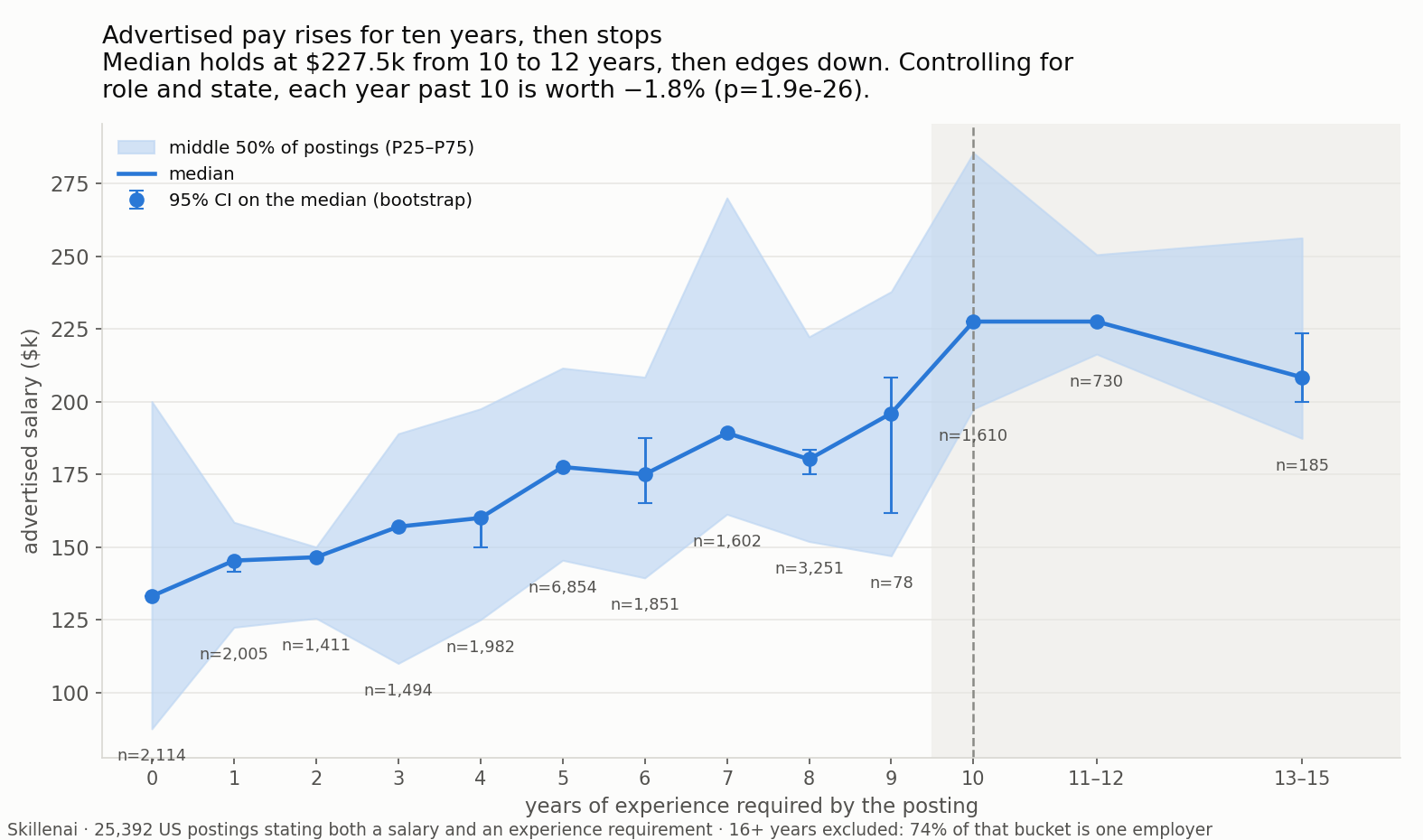
Tech Pay Stops Rewarding Experience at Exactly 10 Years
Across 25,392 US job postings that state both a salary and an experience requirement: pay rises 5.3% a year for a decade, then stops. Only 0.03% of postings ask for more than 20 years.
Posts tagged labor market.
Across 25,392 US job postings that state both a salary and an experience requirement: pay rises 5.3% a year for a decade, then stops. Only 0.03% of postings ask for more than 20 years.
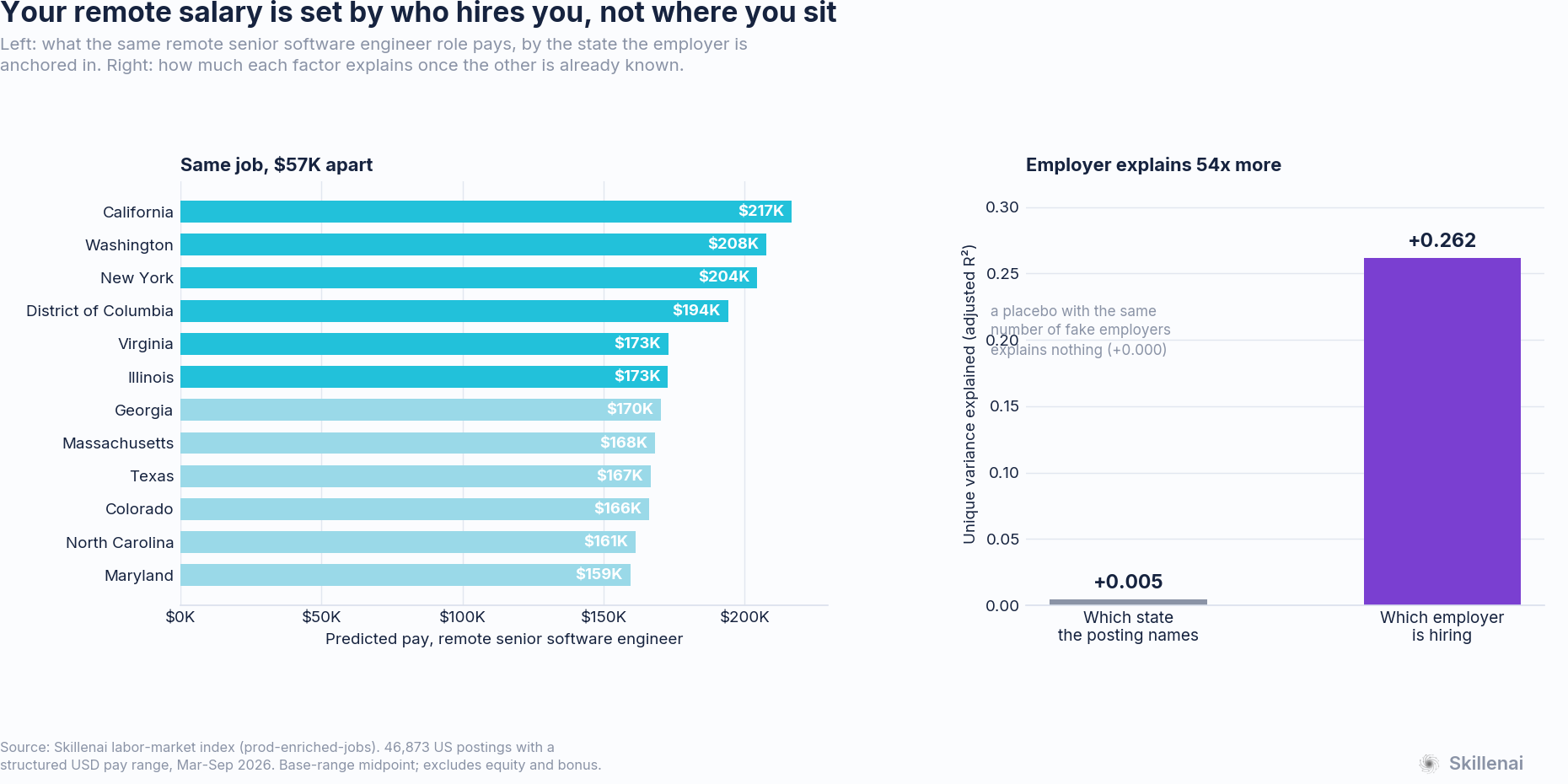
Remote postings advertise 6% more than onsite ones, and that premium is a composition artifact. What survives is geography, and it belongs to the employer: the same remote senior engineering role runs $57,082 apart depending on where the company is anchored, while the state itself explains almost nothing.
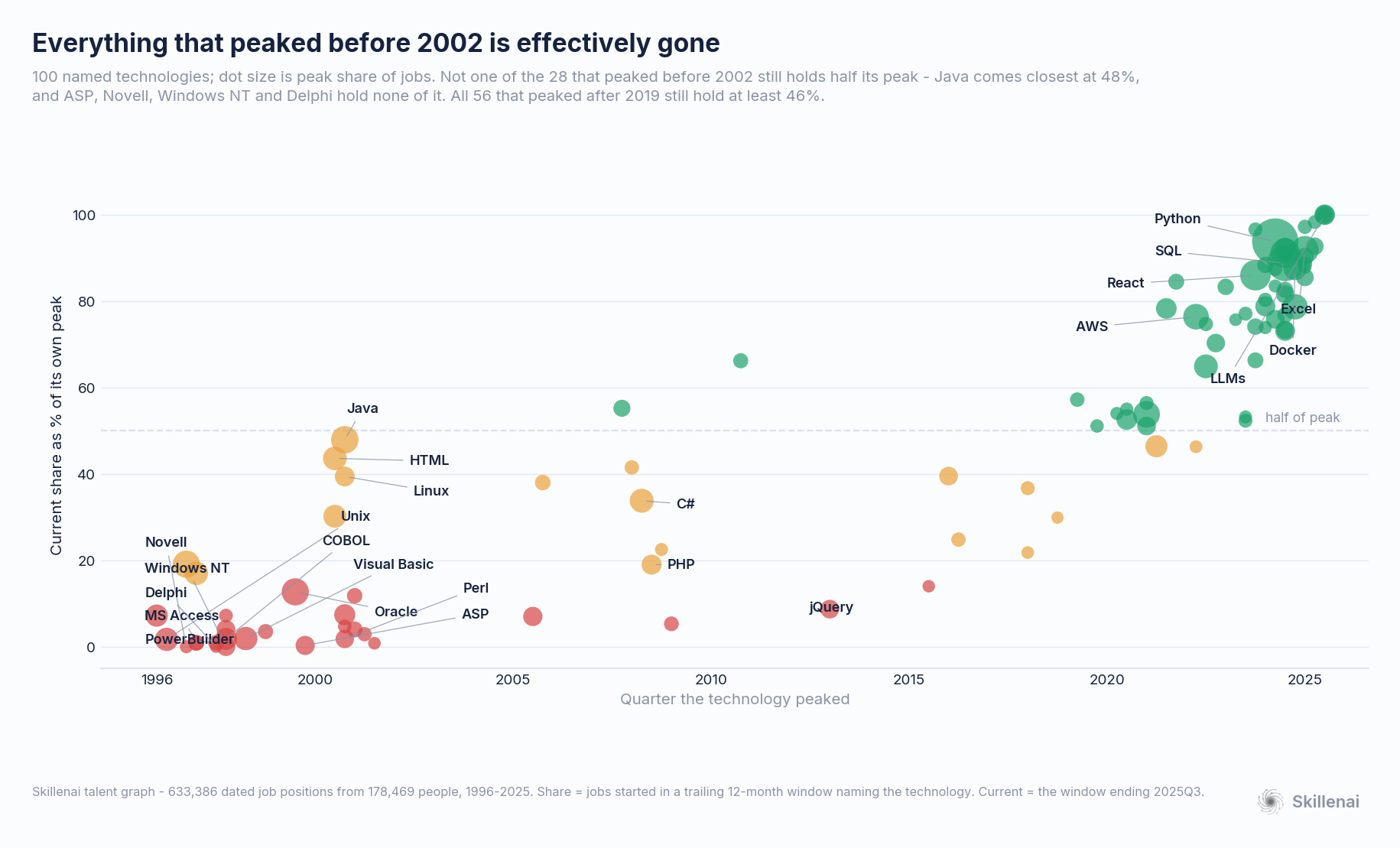
Not one of the 28 named technologies that peaked before 2002 still holds half its peak. Then the churn stopped for seventeen years - and LLMs just climbed faster than anything we can time.
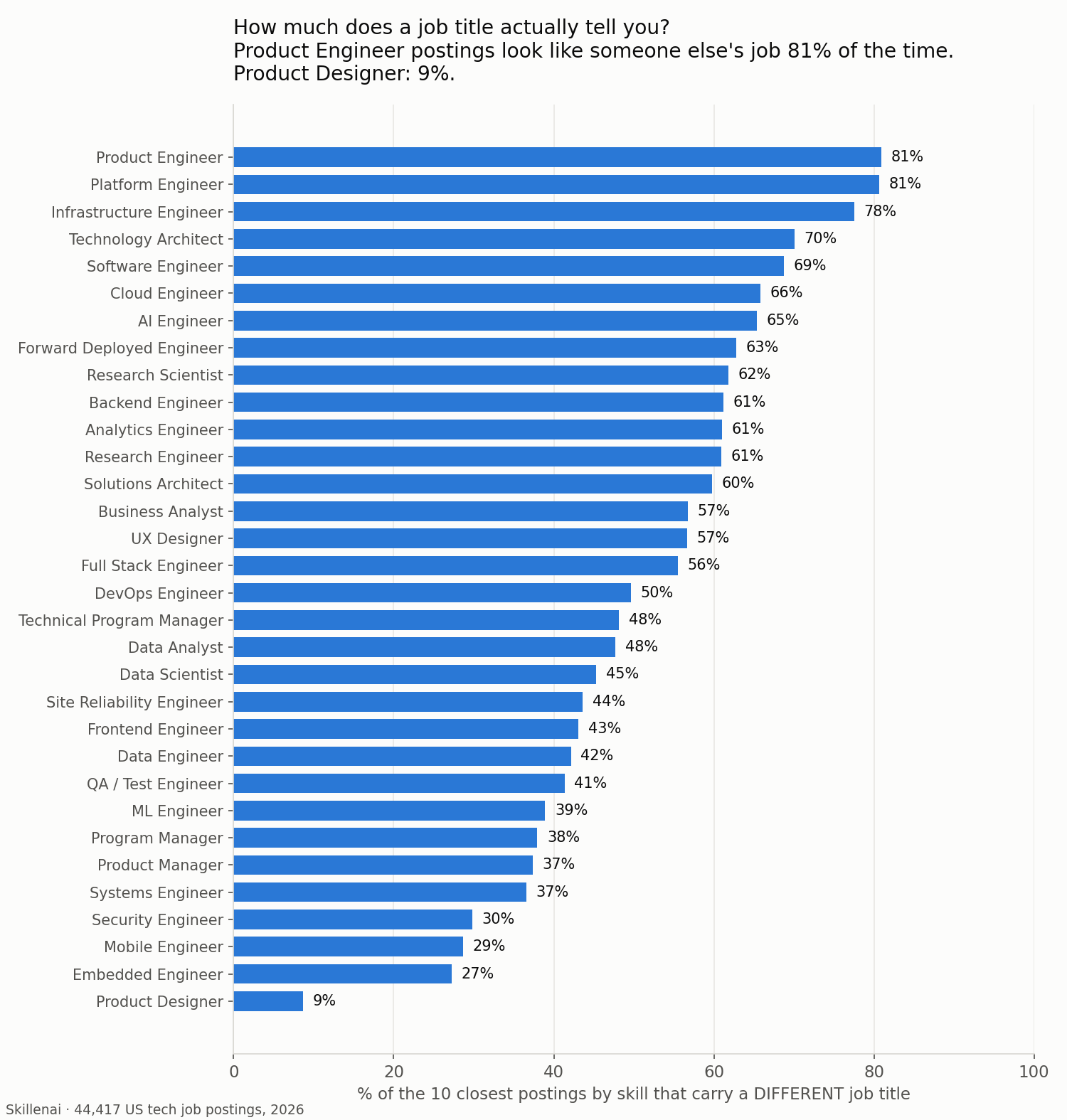
For 52.5% of job postings, most of their closest skill matches carry a different job title. Product Engineer postings look like another job 81% of the time; Product Designer, 9%.
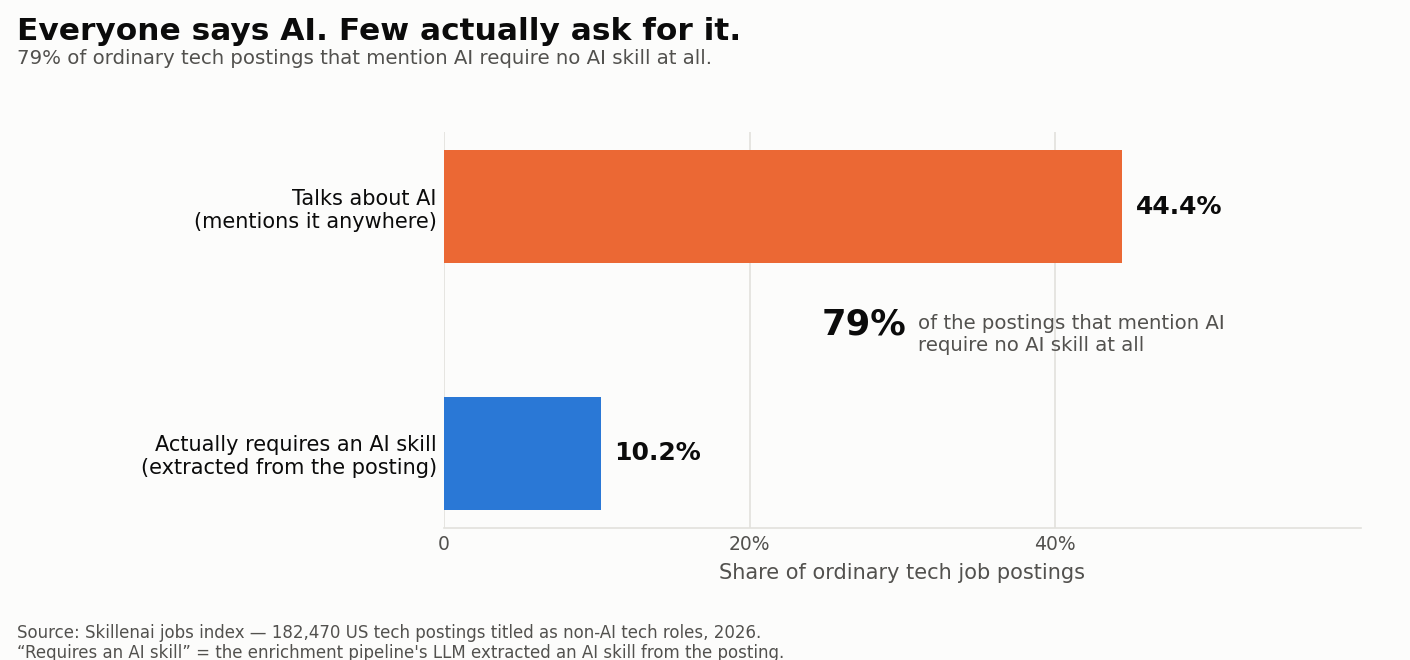
Every company wants to be an AI company. Far fewer want to hire for it. We measured 182,470 job postings and 568,663 tech CVs: employers mention AI four times more often than they ask for it.
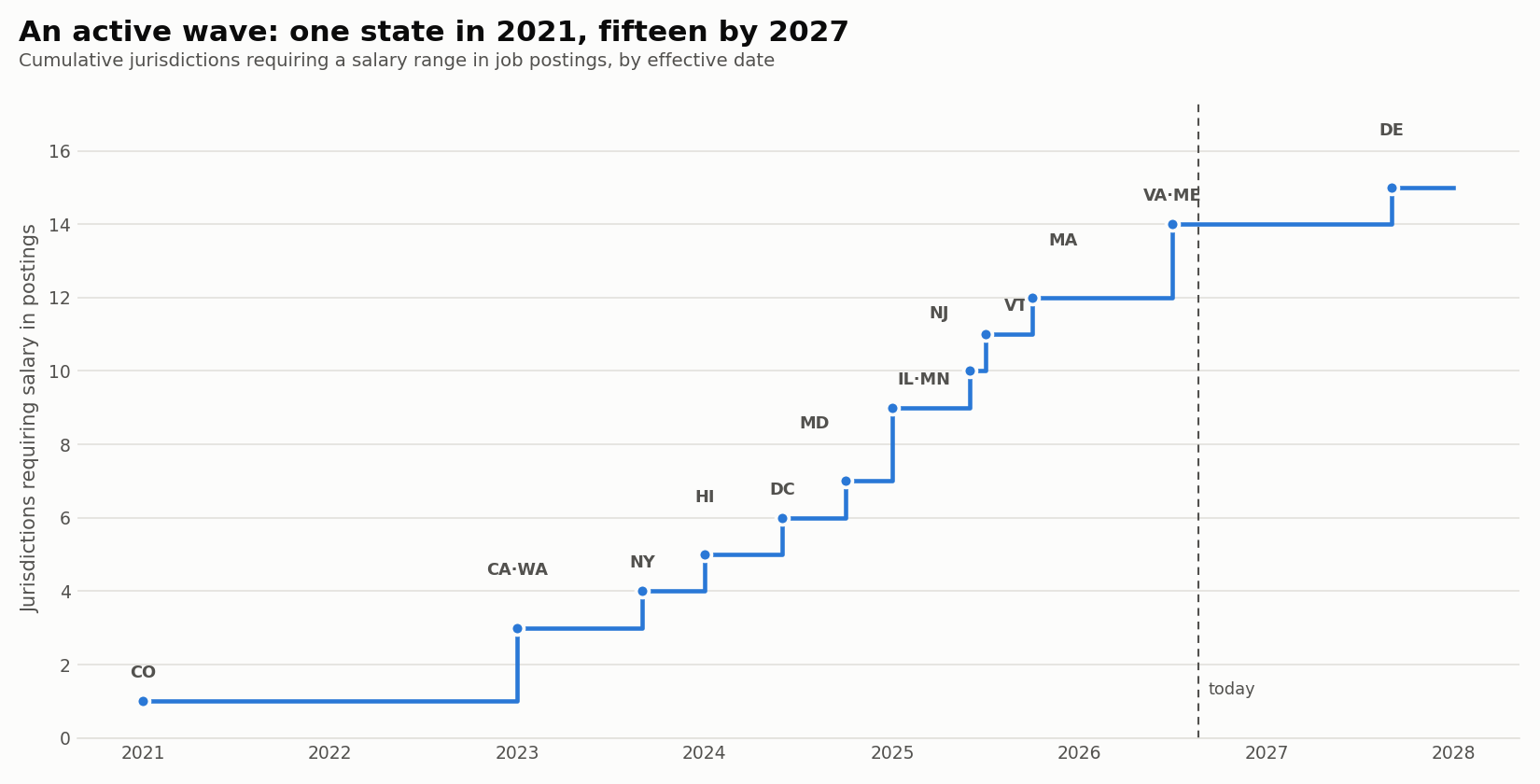
In Washington, 47% of job postings show the salary. In Kansas, 5.3% do. We measured salary disclosure across 118,706 US job postings and 38 states — and found that even where the law requires pay in the posting, roughly half still don't show it.
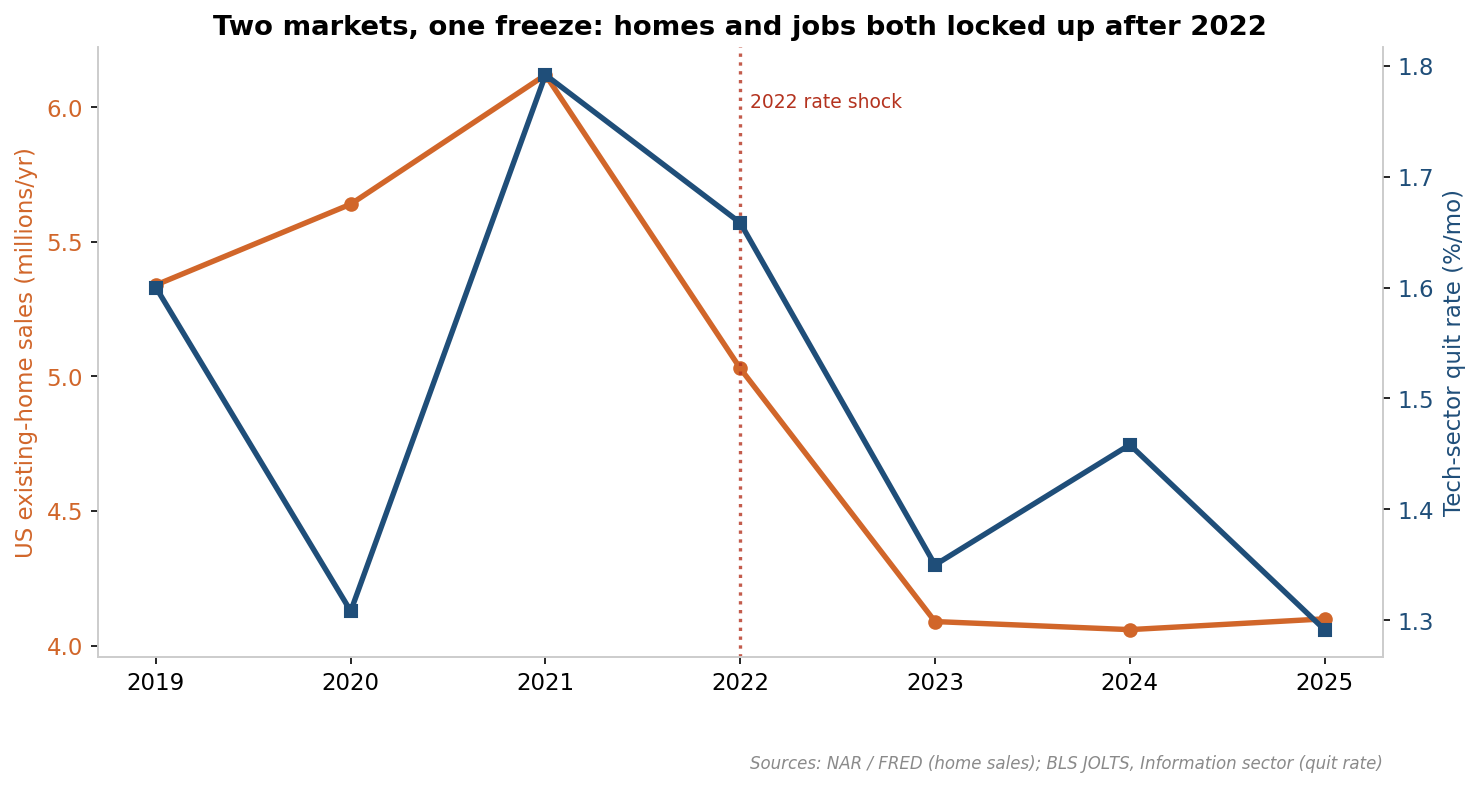
AI didn't torch the junior job market. A frozen labor market did — and the housing market, frozen by the same 2022 rate shock with zero AI, is the control group that proves it.
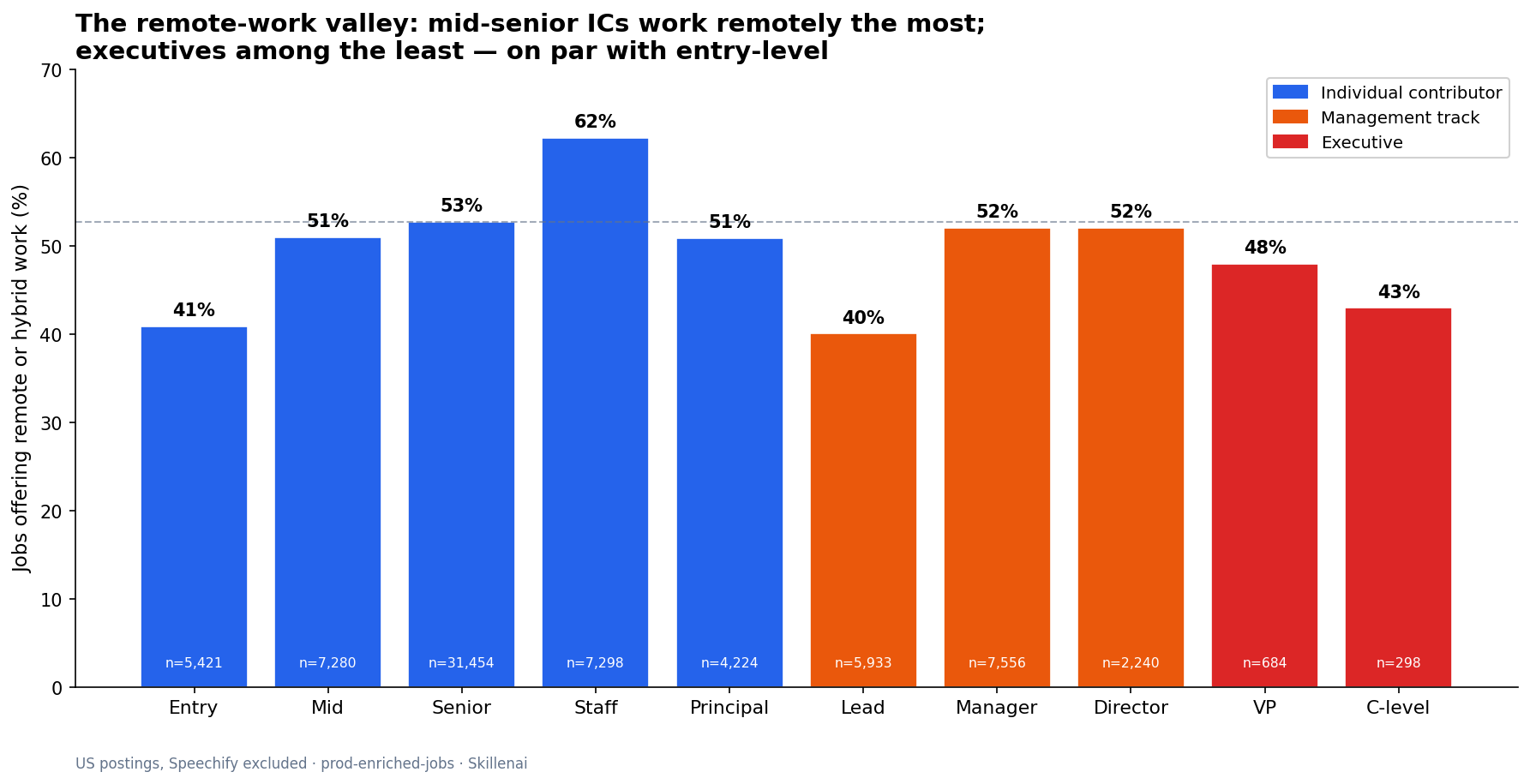
Middle managers' share of layoffs has climbed every year since 2020. We tested the two usual suspects — AI and remote work — against 97,500 US job postings. Both fail. The culprit that fits the timing is a title-inflation bubble we spent a decade blowing up.
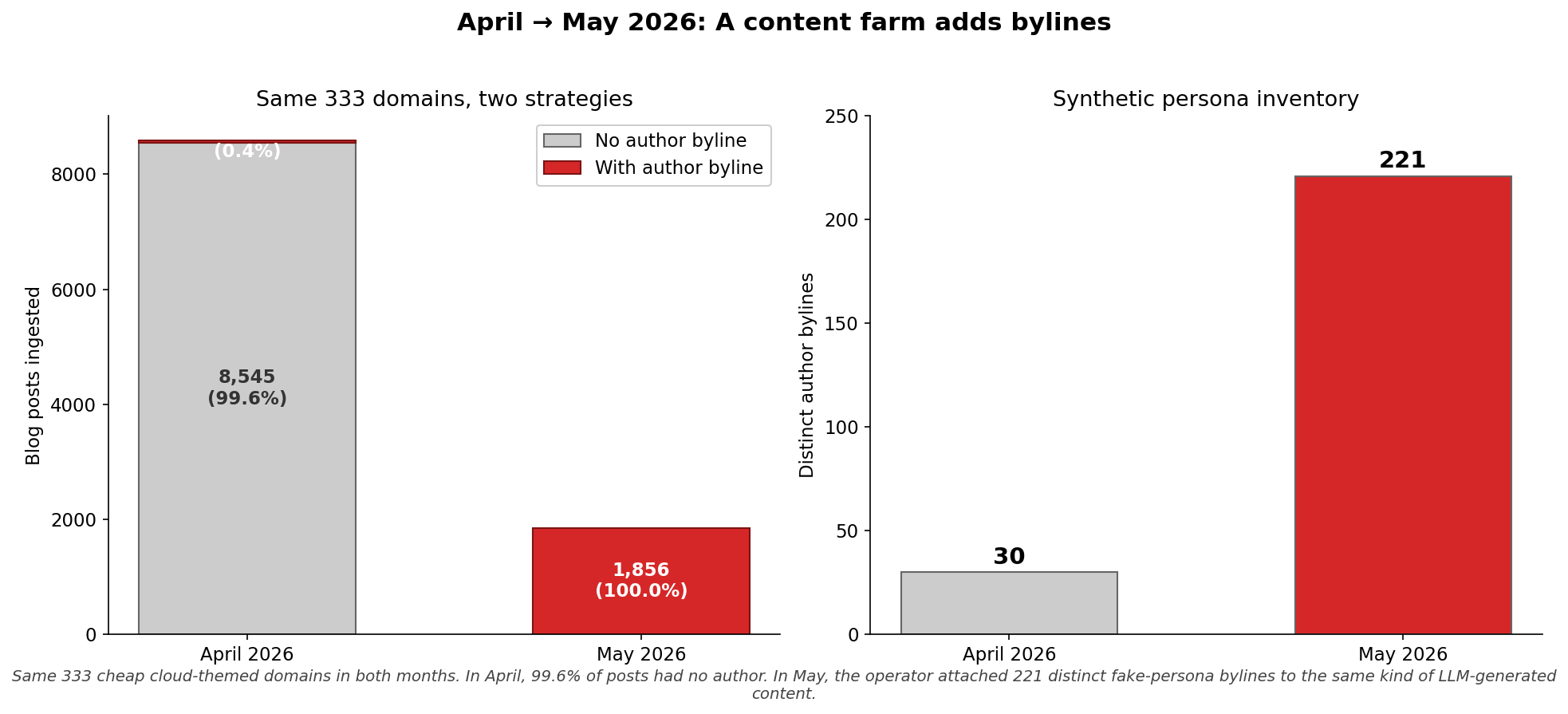
The number-one breakout author in the Skillenai blog index in May 2026 is a man named Daniel Mercer who does not exist. He is the centerpiece of an AI-native Private Blog Network (PBN) — 221 fake bylines across 333 cheap cloud-themed domains — built to game a PageRank-style authority signal. This is the SEO content-farm attack of the 2000s, rerun on a labor-market corpus with LLM-generated content.
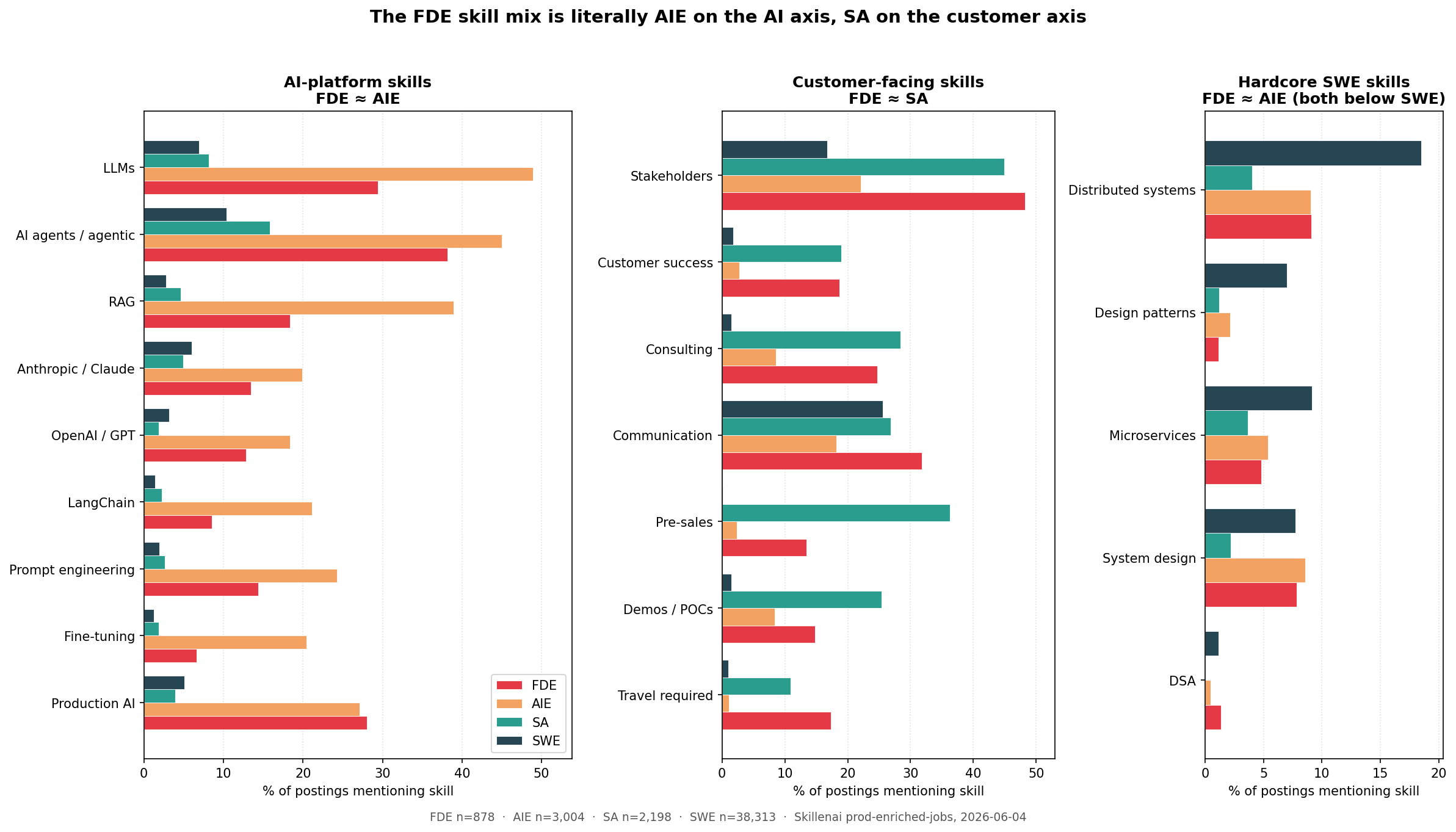
I tested my analogy that Forward Deployed Engineers are to AI Engineers what Solutions Architects were to Software Engineers. Across ~44K postings, the data agrees: FDE is literally AIE on the AI axis, SA on the customer axis. Plus, two twists I didn't expect.