
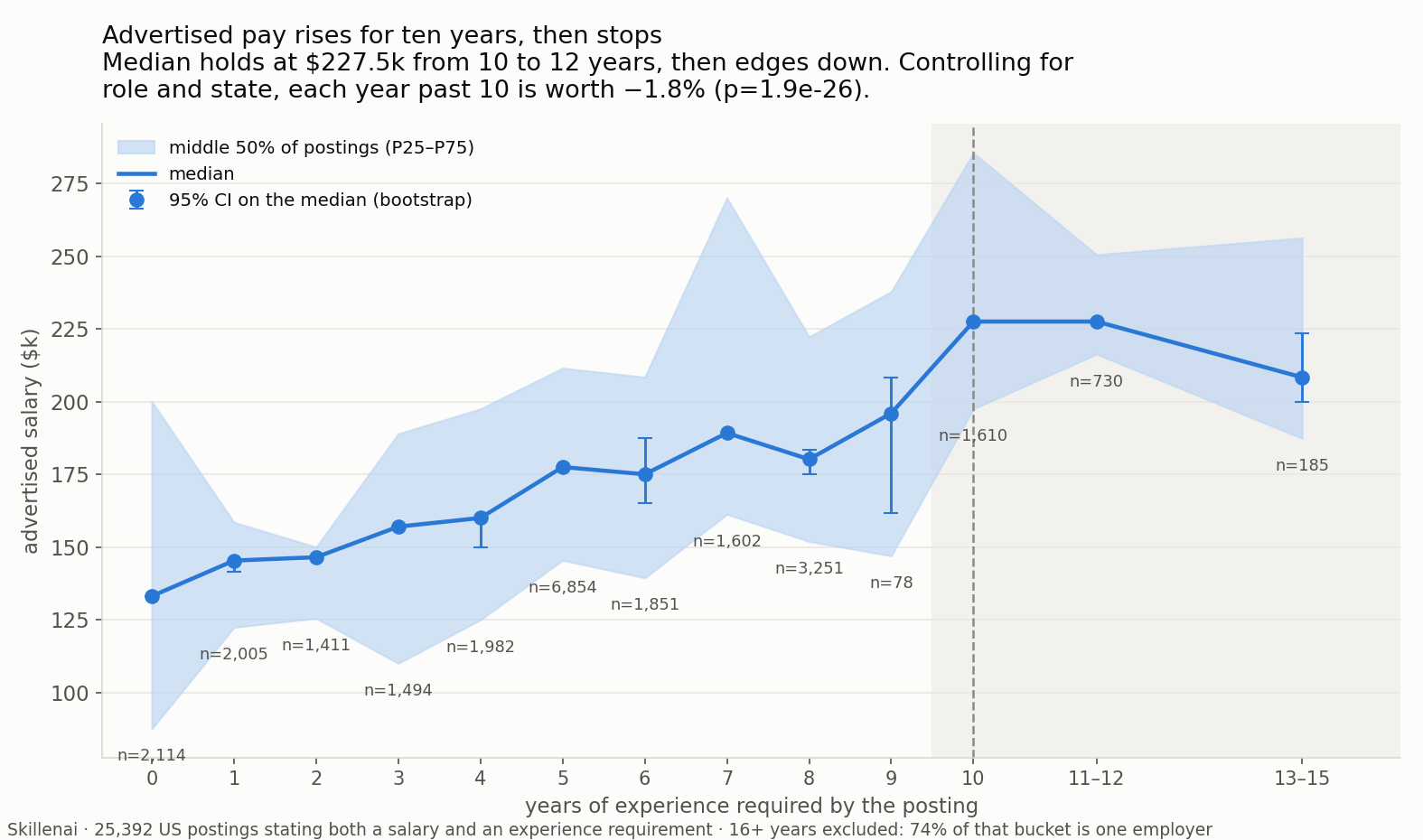
Tech Pay Stops Rewarding Experience at Exactly 10 Years
Across 25,392 US job postings that state both a salary and an experience requirement: pay rises 5.3% a year for a decade, then stops. Only 0.03% of postings ask for more than 20 years.
Posts tagged hiring.
Across 25,392 US job postings that state both a salary and an experience requirement: pay rises 5.3% a year for a decade, then stops. Only 0.03% of postings ask for more than 20 years.
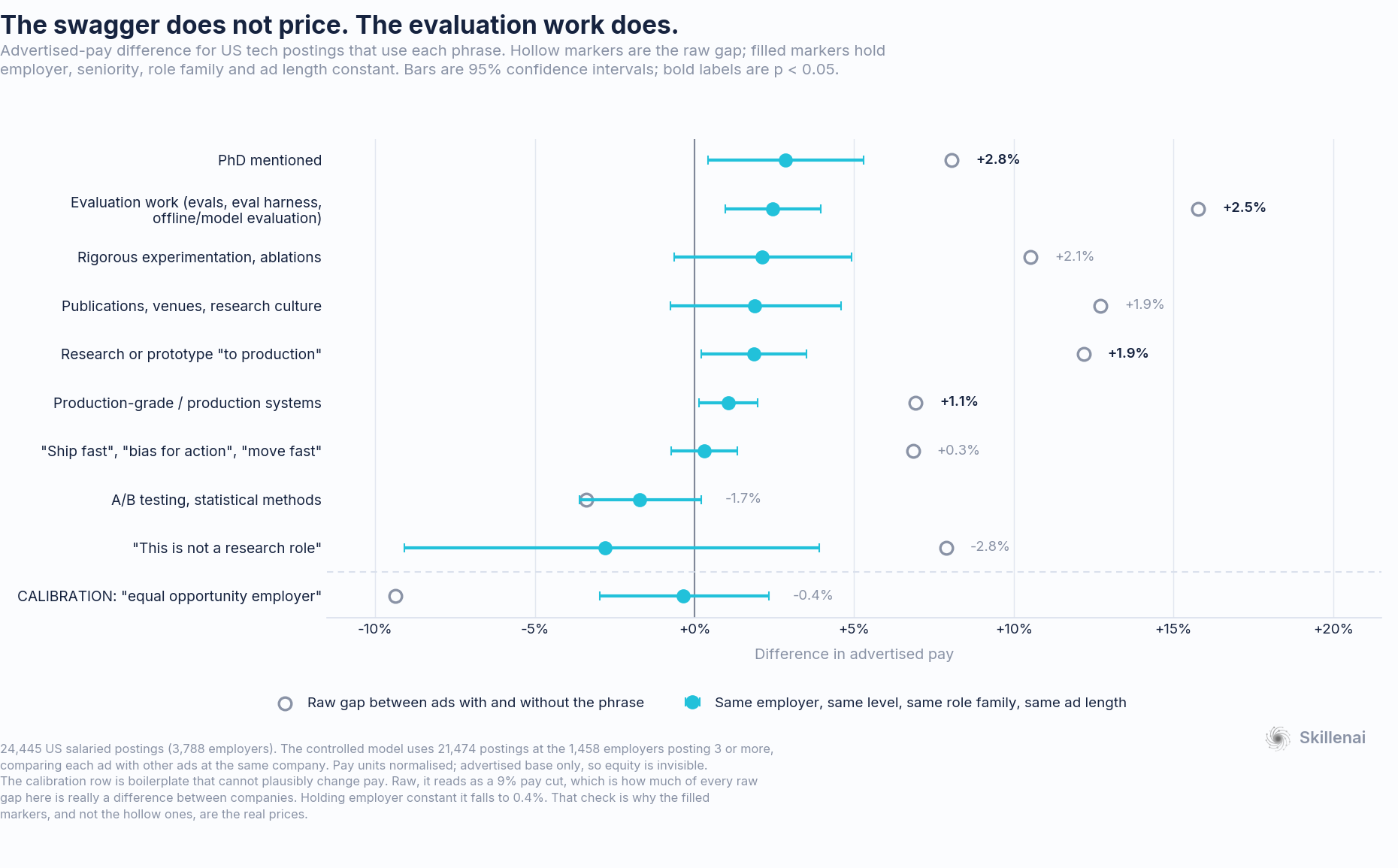
A new line has spread through AI job ads: "this is not a research role." Across 62,659 postings it turns out to be rare, it carries no pay premium, and the ads that use it often ask for the evaluation work they claim not to want.
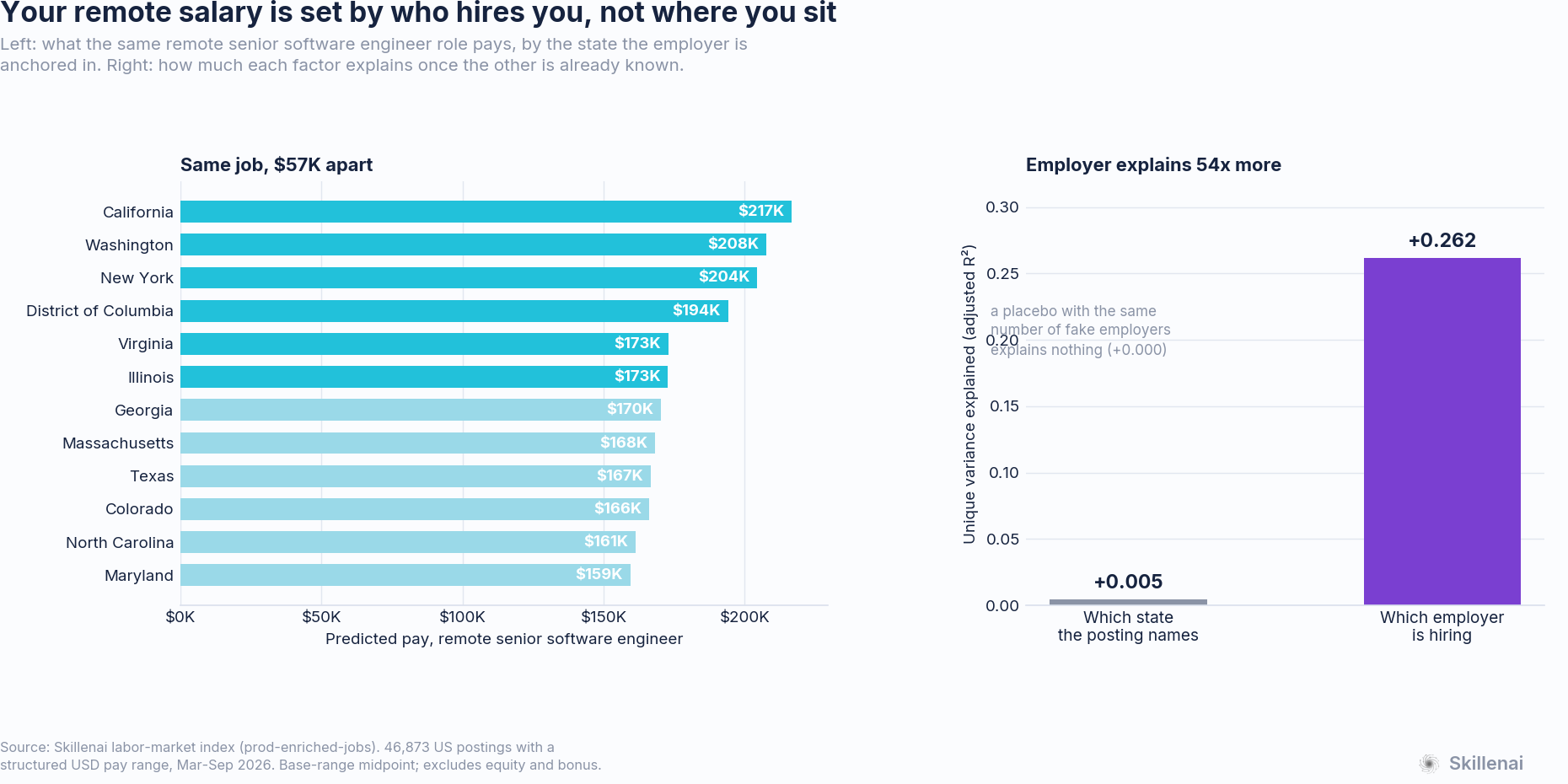
Remote postings advertise 6% more than onsite ones, and that premium is a composition artifact. What survives is geography, and it belongs to the employer: the same remote senior engineering role runs $57,082 apart depending on where the company is anchored, while the state itself explains almost nothing.
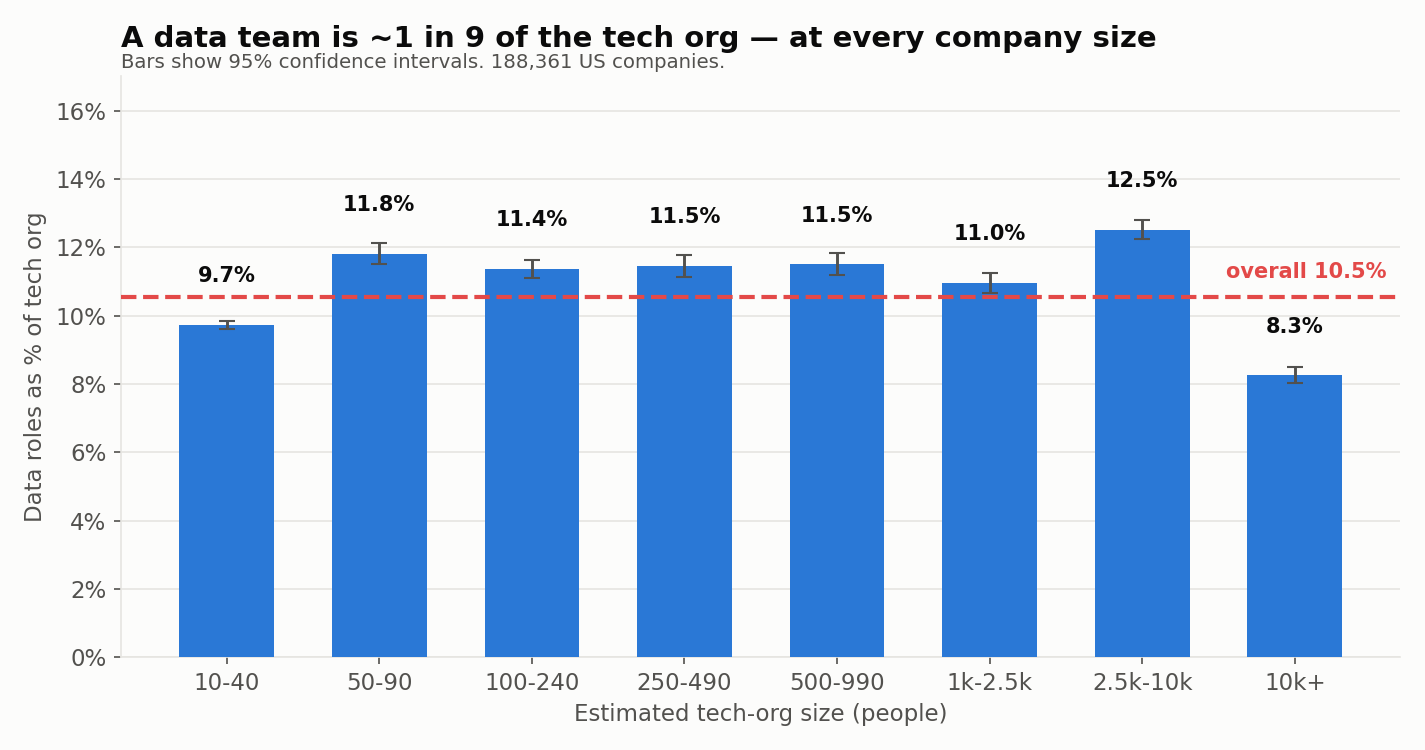
Data roles are a near-constant 10.5% of the tech org, from 10-person teams to 10,000+. What changes with scale isn't the size — it's the mix. And employers are hiring a very different mix than the workforce currently has.
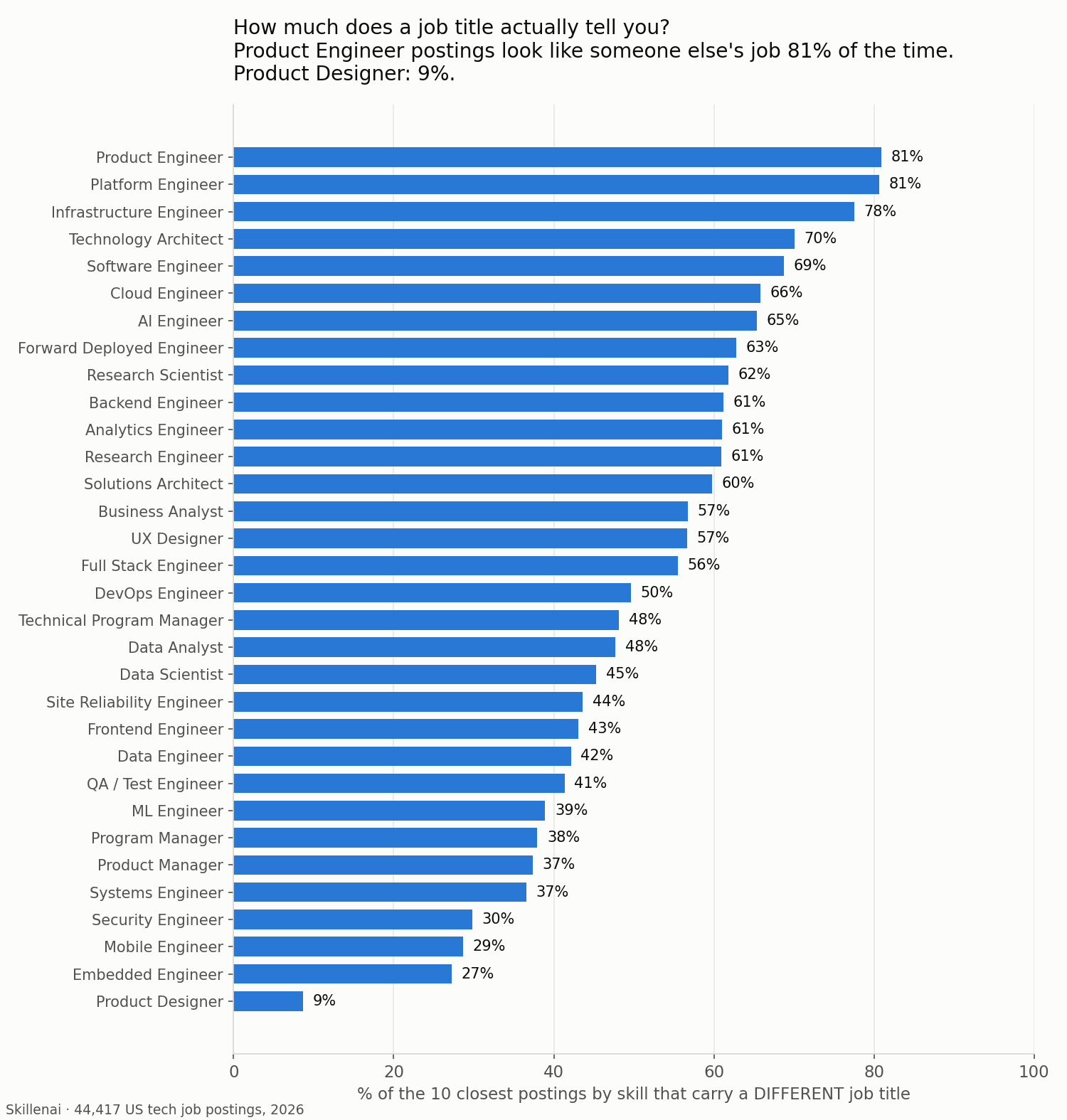
For 52.5% of job postings, most of their closest skill matches carry a different job title. Product Engineer postings look like another job 81% of the time; Product Designer, 9%.
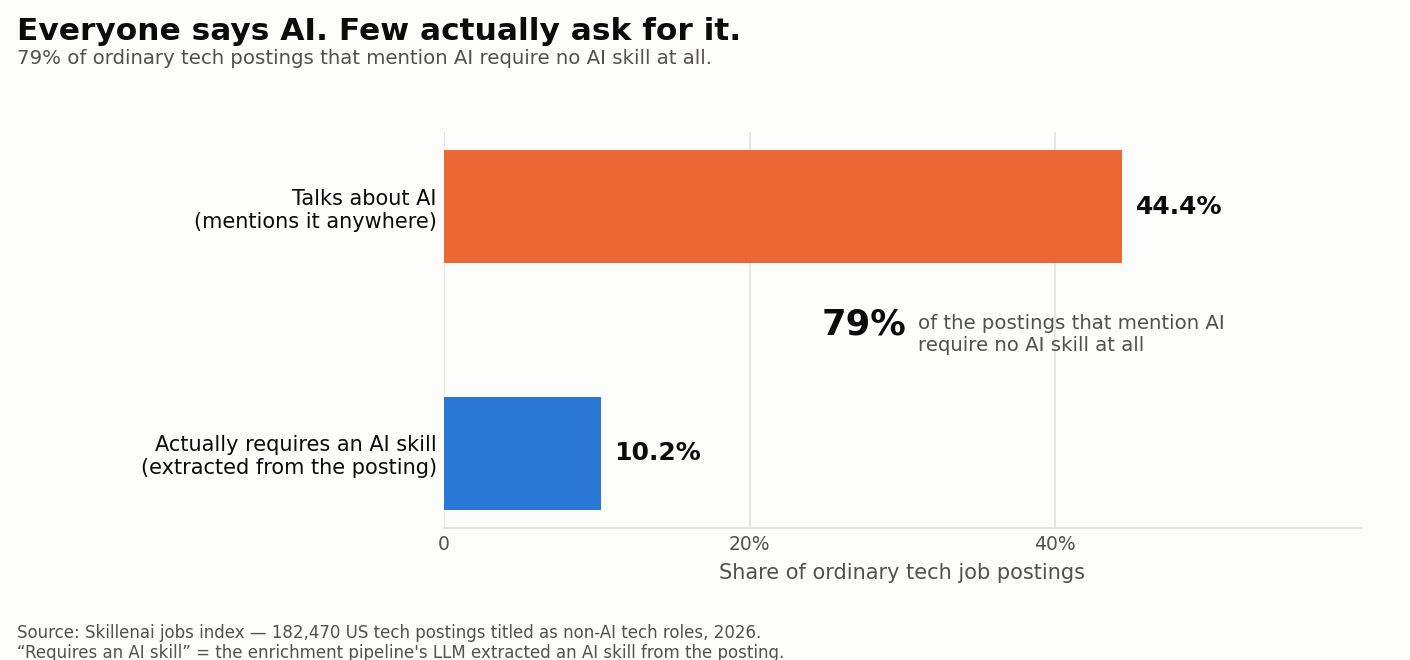
Every company wants to be an AI company. Far fewer want to hire for it. We measured 182,470 job postings and 568,663 tech CVs: employers mention AI four times more often than they ask for it.
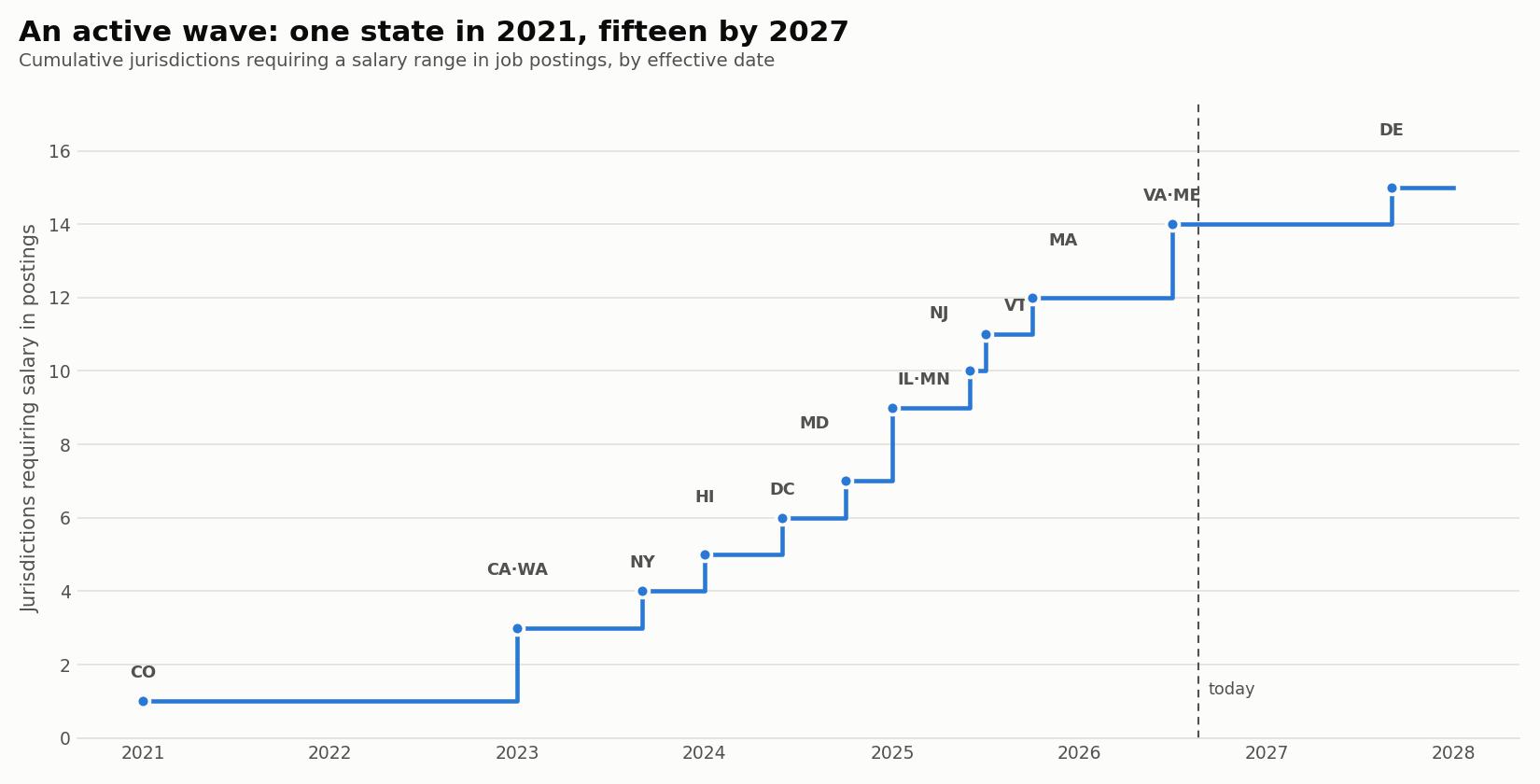
In Washington, 47% of job postings show the salary. In Kansas, 5.3% do. We measured salary disclosure across 118,706 US job postings and 38 states — and found that even where the law requires pay in the posting, roughly half still don't show it.