
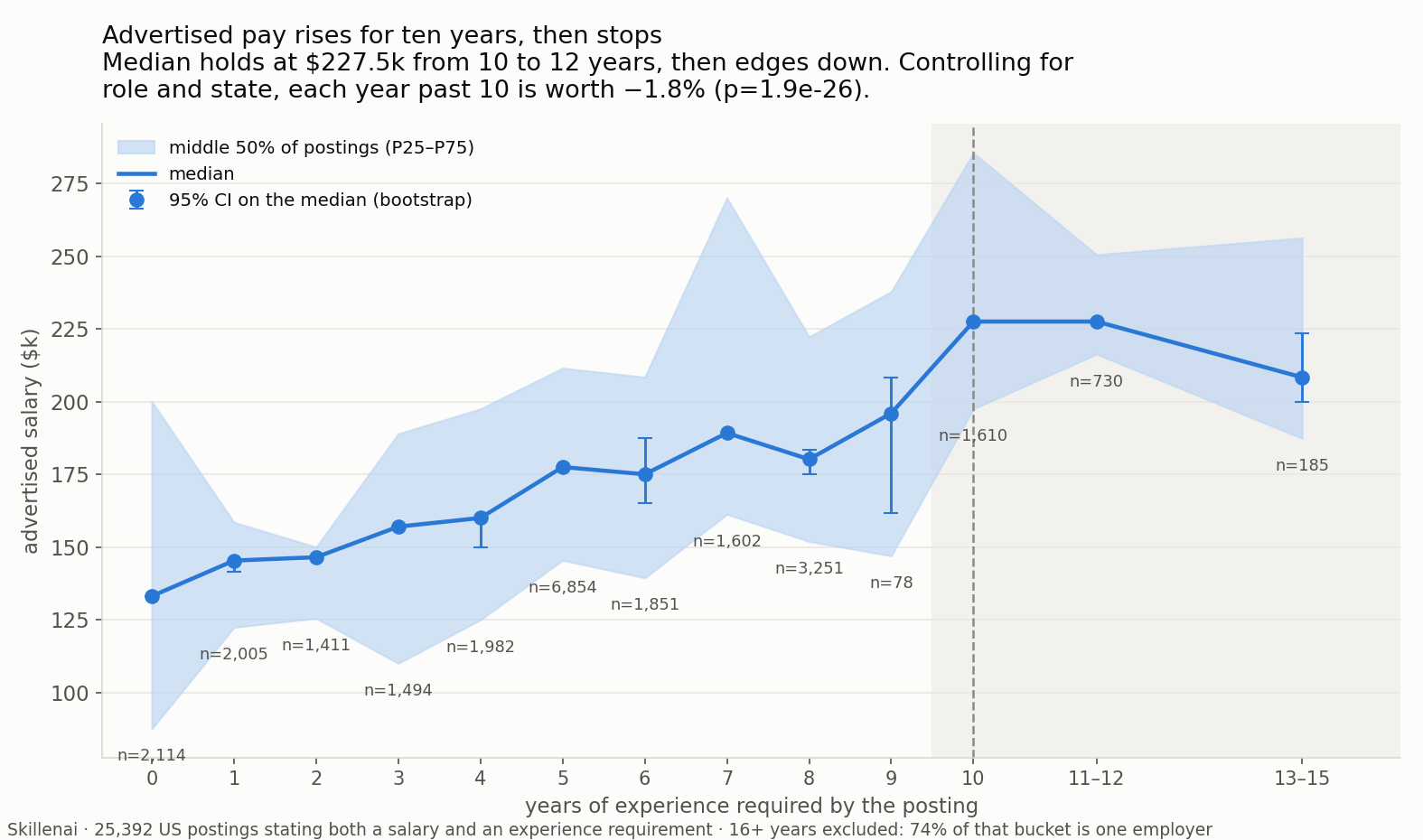
Tech Pay Stops Rewarding Experience at Exactly 10 Years
Across 25,392 US job postings that state both a salary and an experience requirement: pay rises 5.3% a year for a decade, then stops. Only 0.03% of postings ask for more than 20 years.
Posts tagged salary.
Across 25,392 US job postings that state both a salary and an experience requirement: pay rises 5.3% a year for a decade, then stops. Only 0.03% of postings ask for more than 20 years.
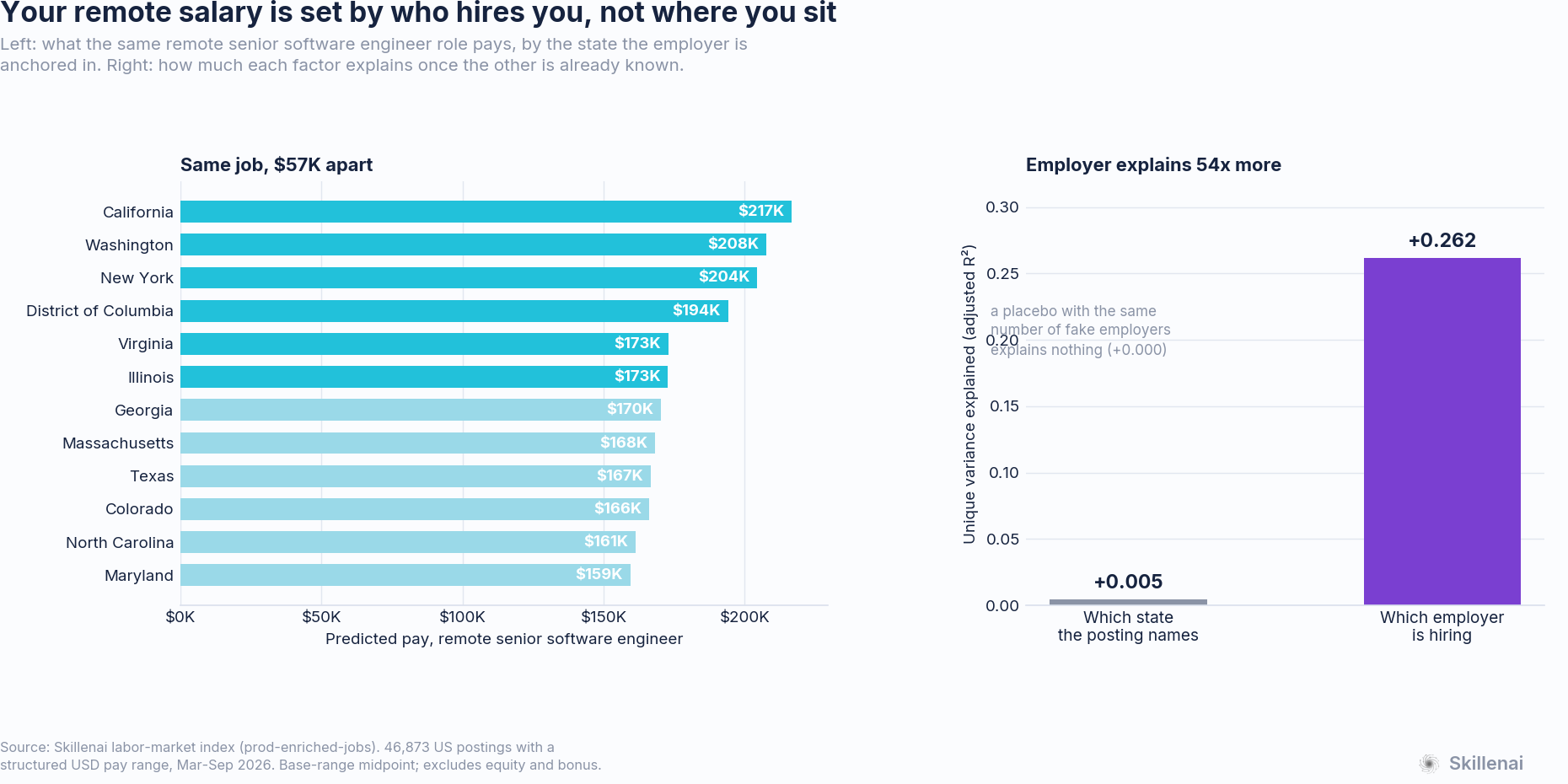
Remote postings advertise 6% more than onsite ones, and that premium is a composition artifact. What survives is geography, and it belongs to the employer: the same remote senior engineering role runs $57,082 apart depending on where the company is anchored, while the state itself explains almost nothing.
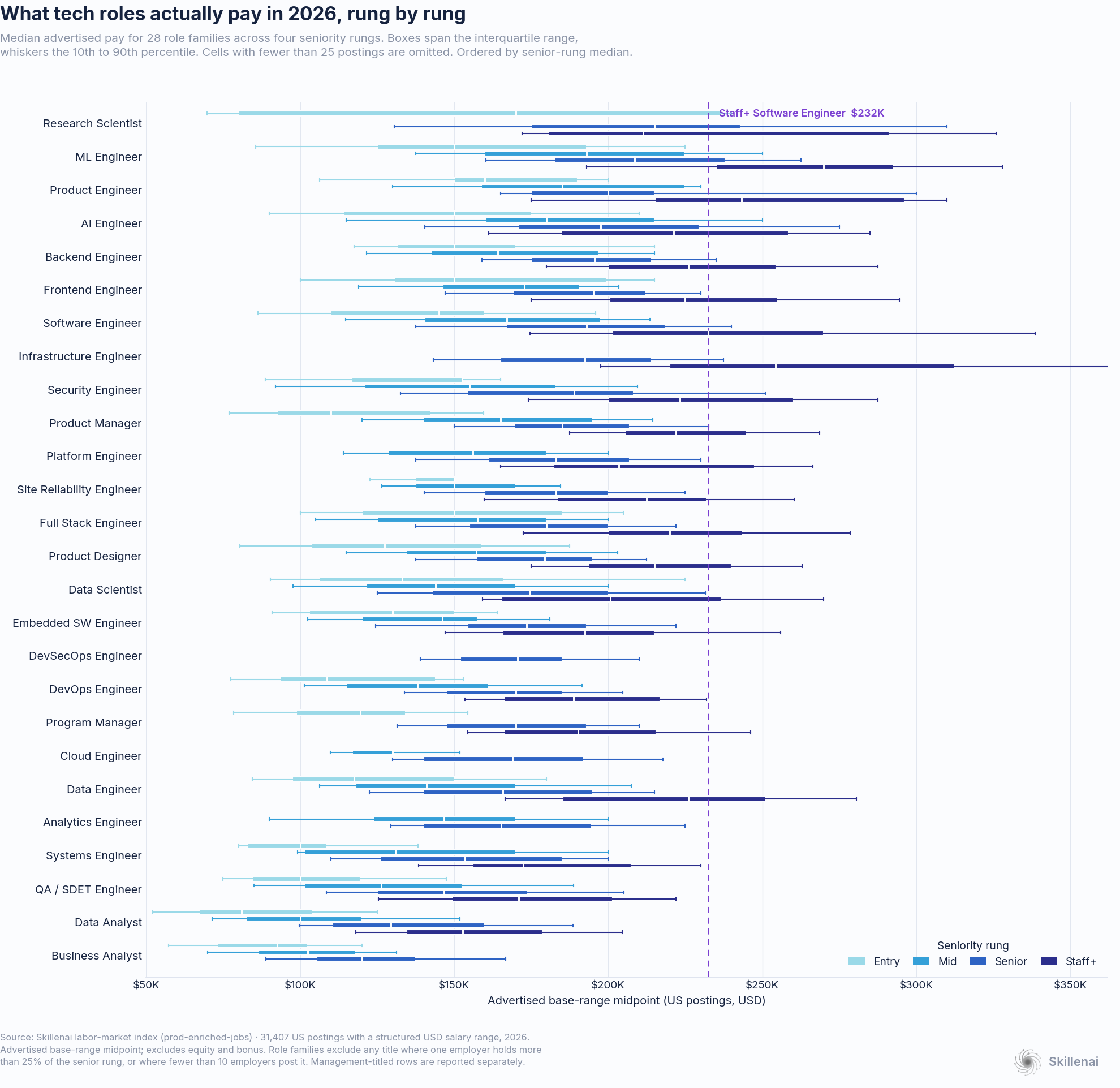
Research Scientist ($215K) and ML Engineer ($209K) top the senior rung. But the gap to a plain software engineer is $16K, while the gap between a mid and a staff engineer doing the same job is $65K.
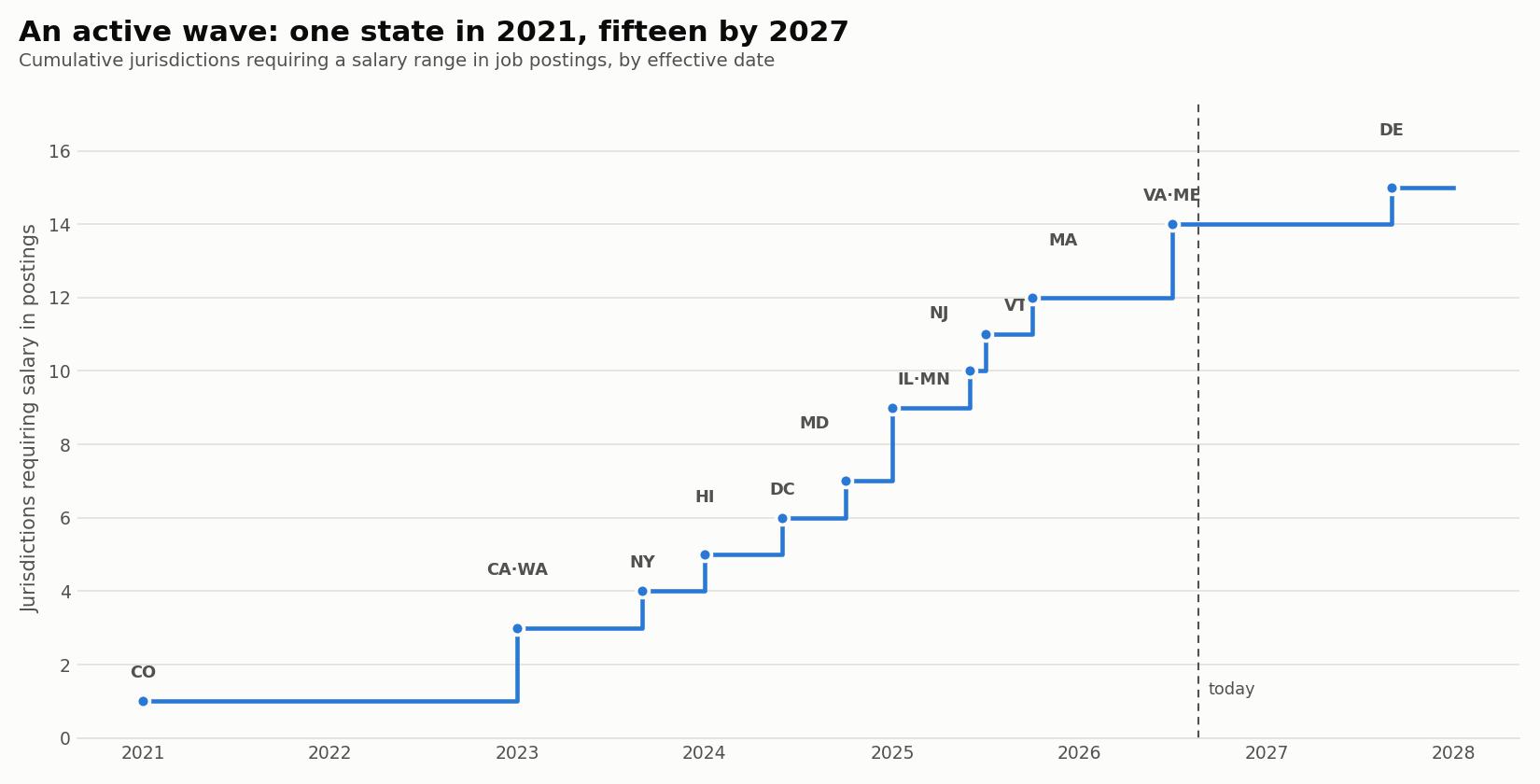
In Washington, 47% of job postings show the salary. In Kansas, 5.3% do. We measured salary disclosure across 118,706 US job postings and 38 states — and found that even where the law requires pay in the posting, roughly half still don't show it.
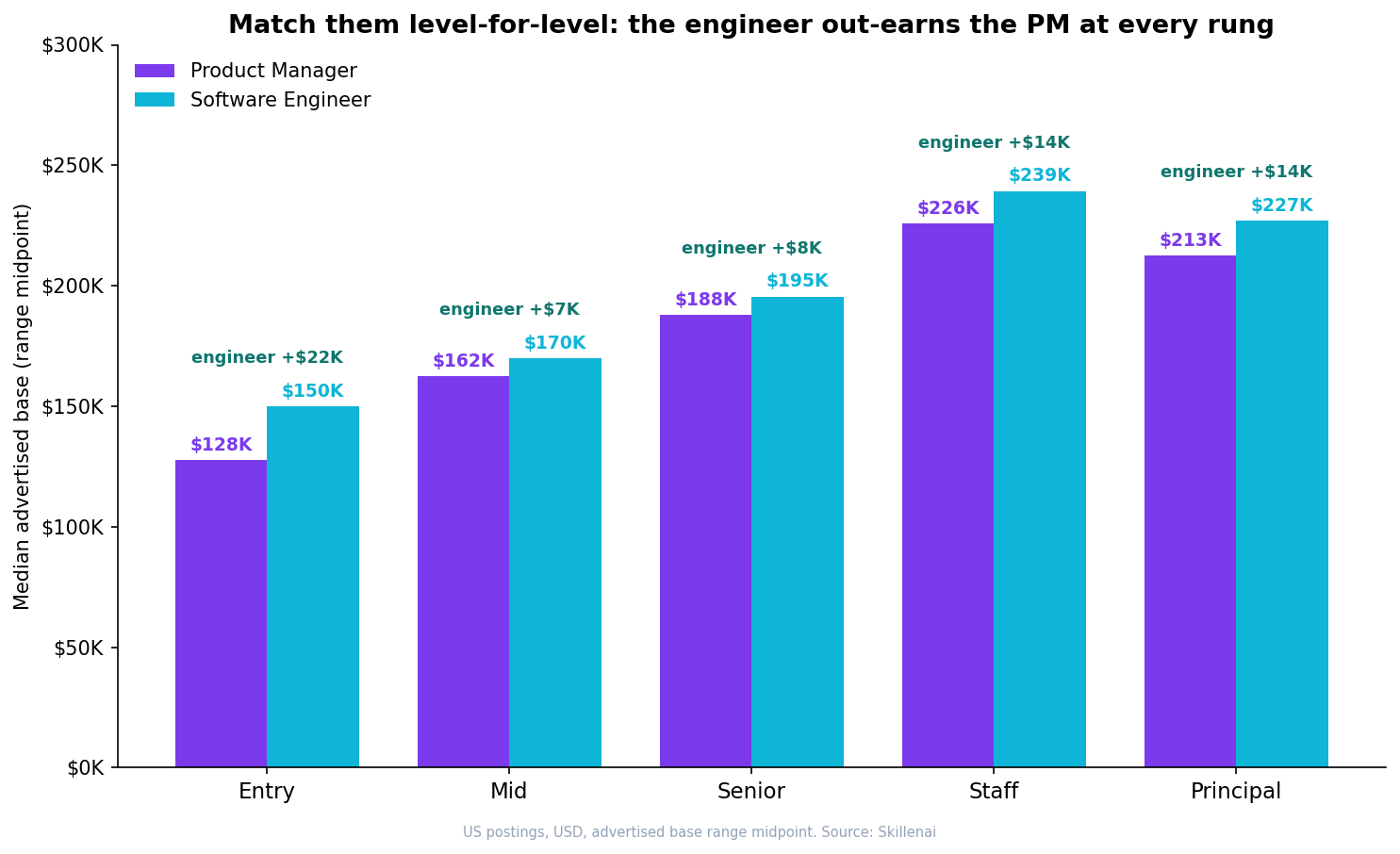
A viral Levels.fyi post says the median PM out-earns the median engineer. Across the open job market, that gap is a spam artifact plus a composition effect — match them rung-for-rung and the engineer wins every level.
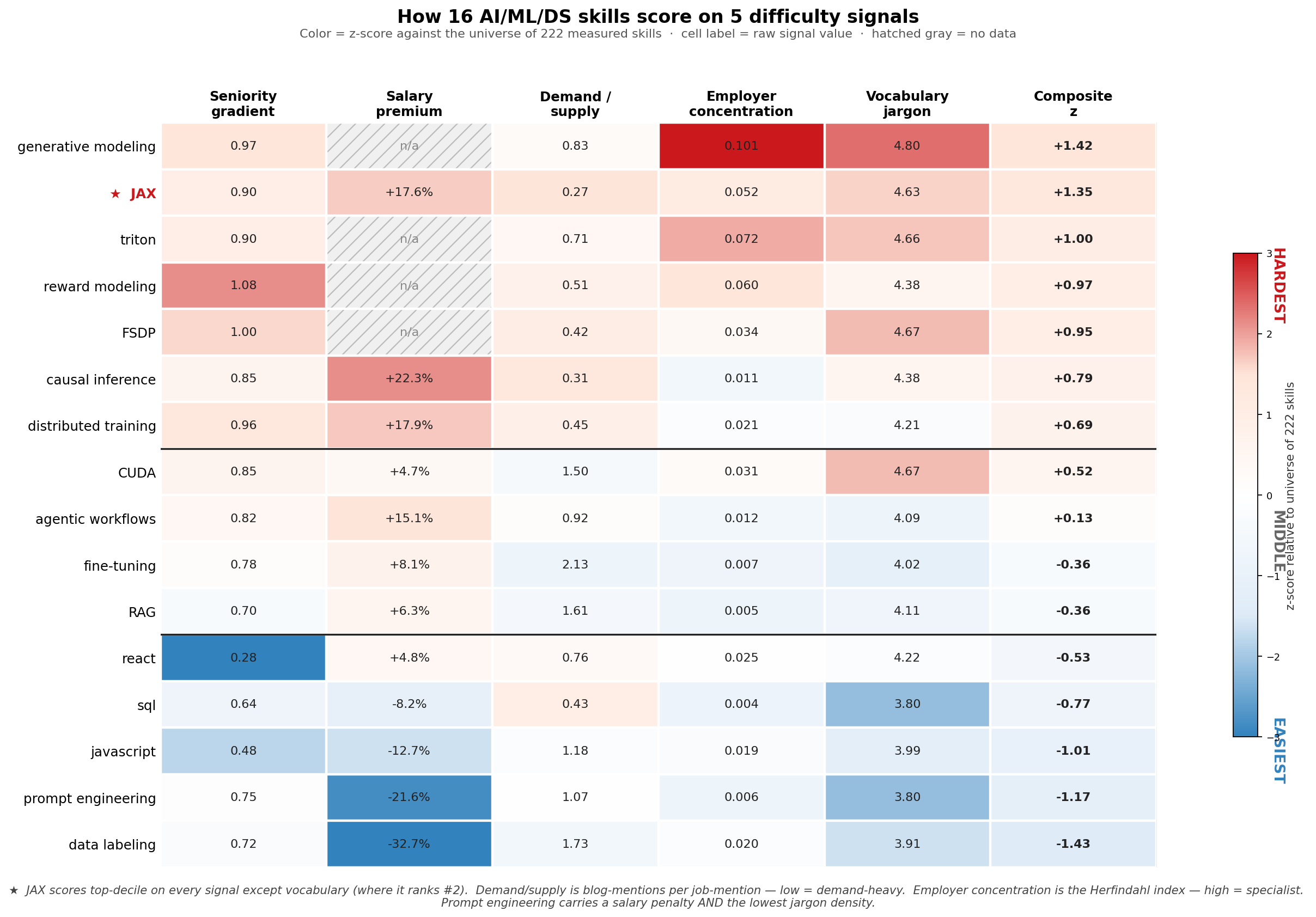
We scored 222 AI/ML/DS skills on five independent difficulty signals. Out of 222, exactly one scores positive on all five: JAX — Google's numerical-computing library that powers Gemini, Gemma, and parts of Claude.